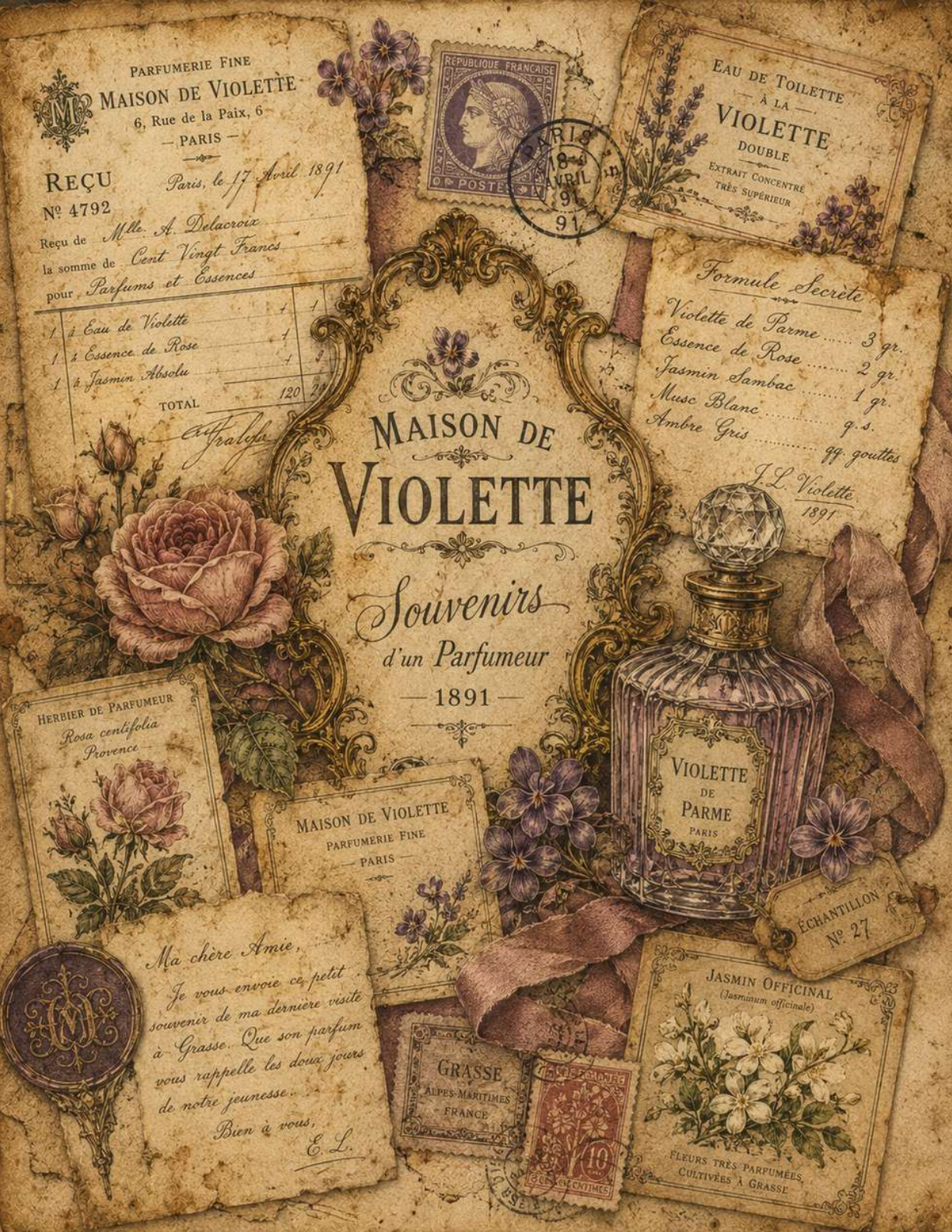
A junk journal can be much more than a collection of beautiful papers. With a little planning, it can become a story that unfolds every time someone turns a page. Printable junk journal kits are especially useful for this because their papers, pockets, tags and ephemera already share a coordinated theme.
Here is how to transform a printable kit into a journal filled with characters, secrets and discoveries.
Begin With a Simple Story Idea
Your story does not need to be complicated. Start with one intriguing sentence, such as:
An old journal was discovered in the attic of an abandoned house.
This immediately gives you a setting and a mystery. Other ideas might include a botanist recording unusual plants, a traveller sending letters from distant places or a secret society keeping records of its missing members.
Choose an idea that suits the artwork in your kit. A botanical kit could become a naturalist’s field journal, while vintage correspondence papers might tell the story of a forgotten pen pal.
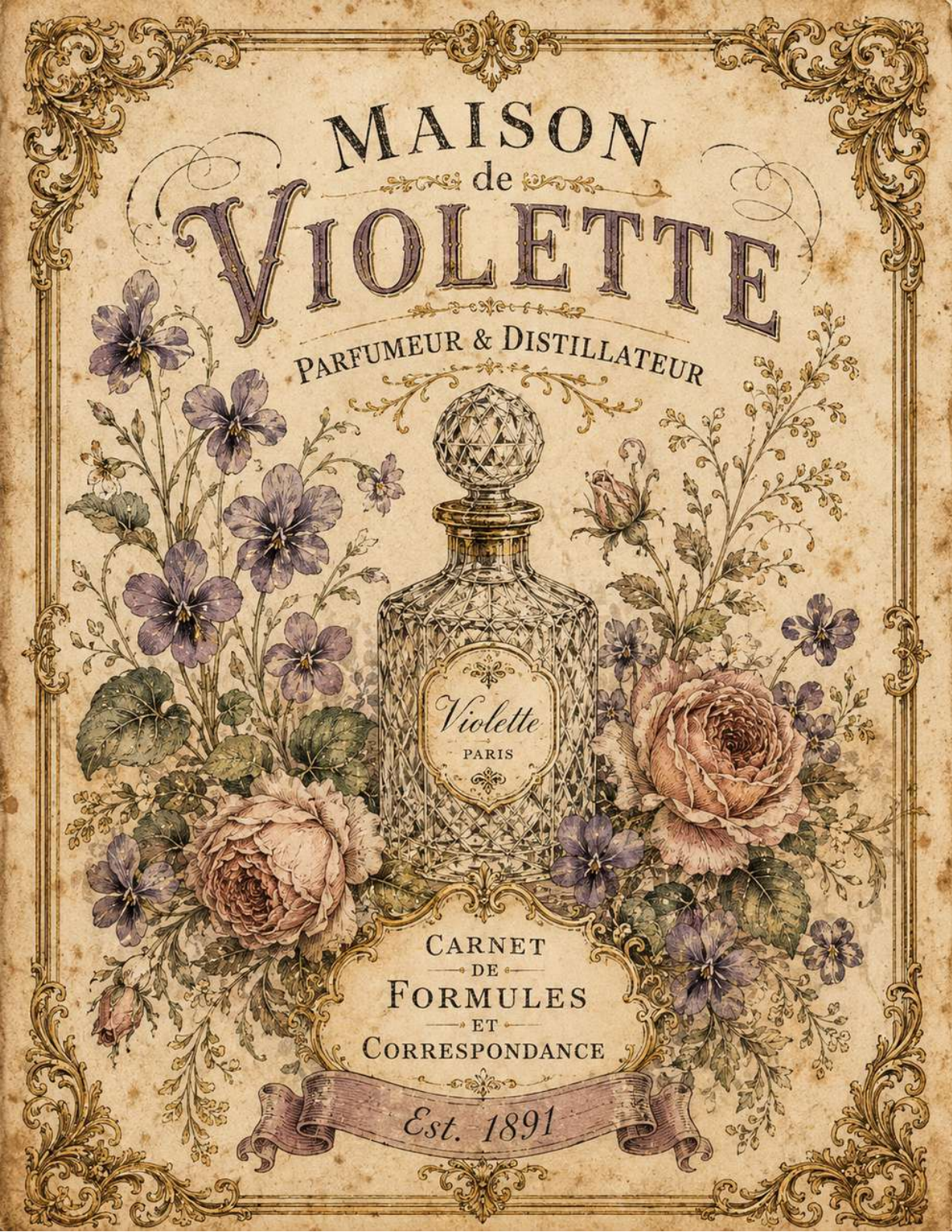
Create a Journal Keeper
Decide who originally owned the journal. Give this person a name, an occupation and a reason for keeping records.
You do not need to write a complete biography. Three or four details are enough to guide your choices. For example, your journal keeper might be a Victorian gardener named Aurelia who secretly studies poisonous plants.
Add her name to a bookplate, membership card, luggage tag or handwritten note. Small personal details make the journal feel as though it belonged to a real person.
Arrange the Pages Like a Journey
Instead of placing printable pages randomly, arrange them in a loose story order.
Begin with introductory pages that establish the owner and setting. In the middle, include discoveries, letters, maps, lists and unusual records. Toward the end, introduce an important clue, unanswered question or final message.
Not every page needs writing. Decorative papers create pauses between important parts of the story and give the journal space to breathe.
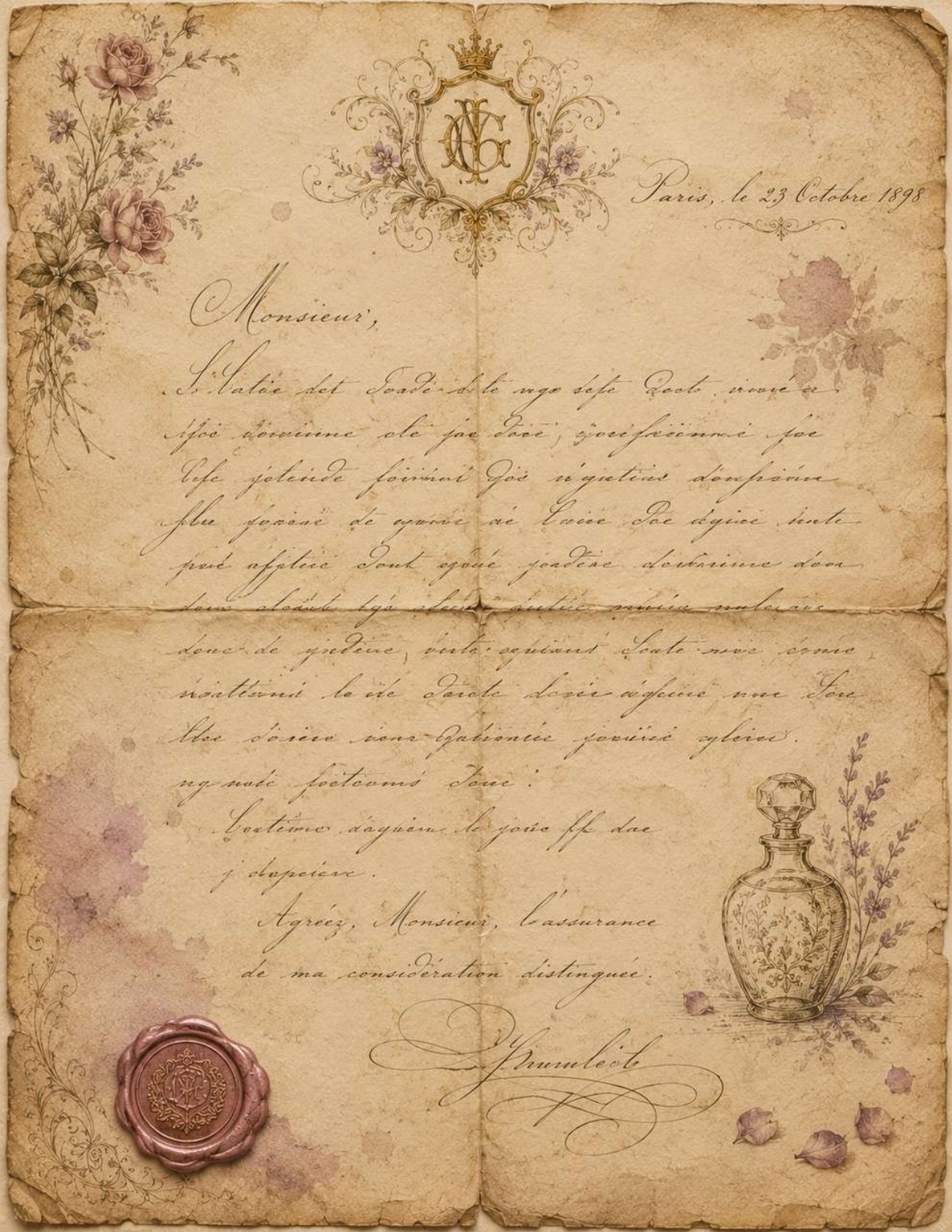
Use Ephemera to Reveal Details
Pockets, envelopes and tags are perfect for hiding information. Place a letter inside an envelope, tuck a photograph behind a journaling card or attach a label to an imaginary specimen.
A partially hidden item naturally makes the reader curious. It invites them to remove the piece, examine it and discover how it connects to the story.
You can also repeat one symbol throughout the journal—a flower, key, number or seal. Repeated details help connect the pages and can become clues.
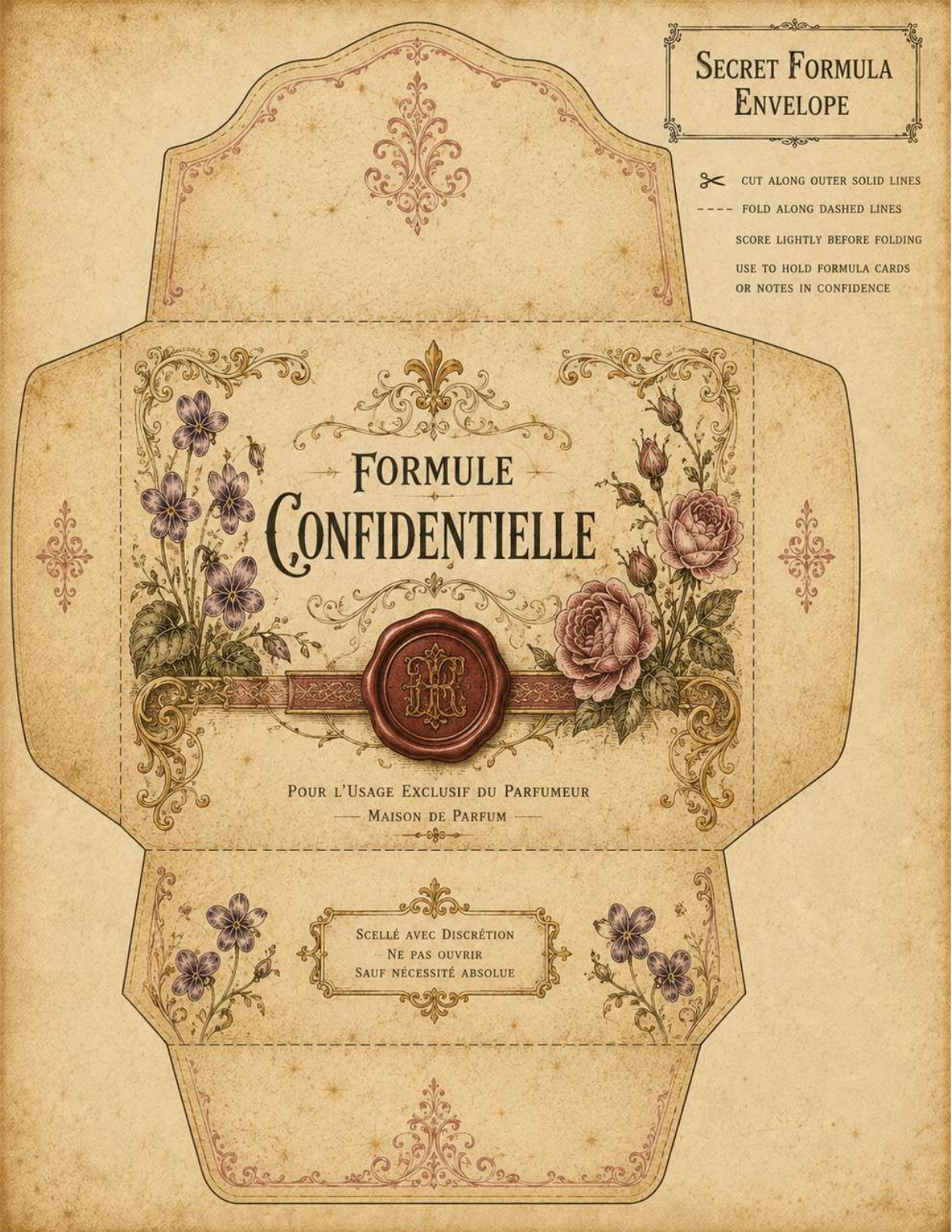
Add Writing Without Filling Every Page
Short handwritten entries often feel more believable than long passages. Try adding dates, names, observations, addresses or unfinished sentences.
Leave plenty of blank spaces for the journal’s new owner to add personal writing. The printed story and the user’s own memories can exist together.
End With Possibility
A story-rich junk journal does not need a definite conclusion. You might finish with an unopened letter, an incomplete map or a final question.
The best ending leaves enough mystery for the next person to continue the story. That is what makes a junk journal feel personal, interactive and wonderfully alive.
View The Antique Perfumer’s Archive →